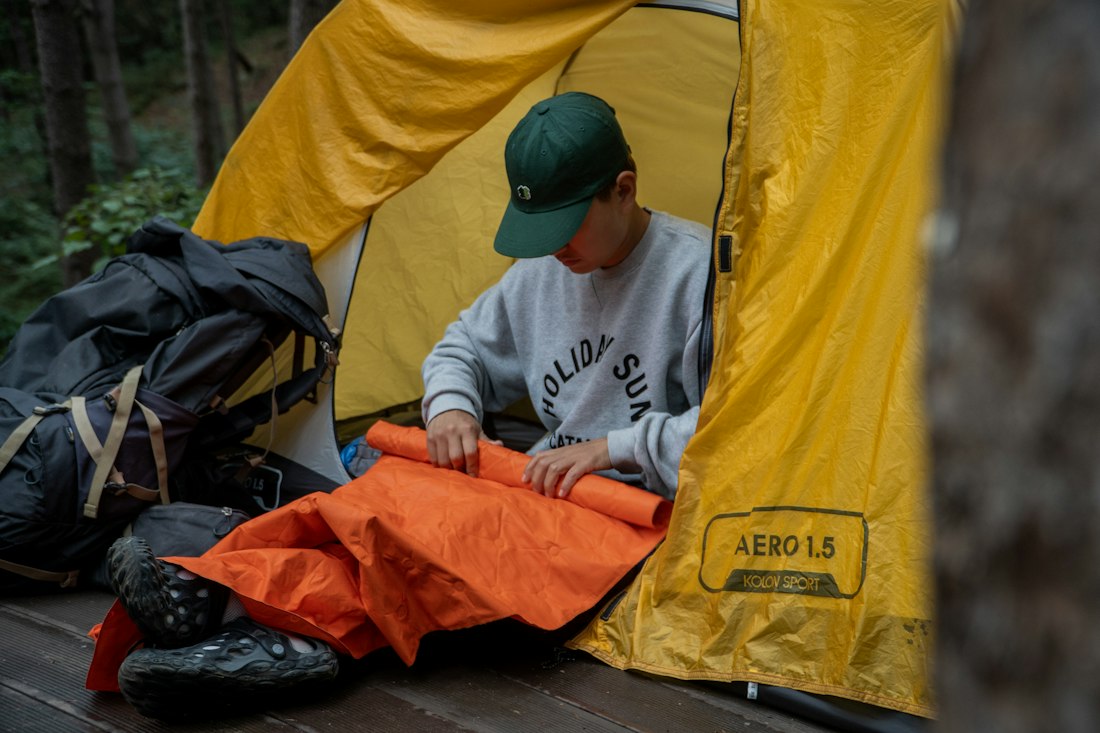
Treat the person rating as a starting point. Compare the floor dimensions with your sleeping pads and decide where wet gear will go.
Begin with the space you will use
A tent’s advertised capacity is not a universal comfort standard. Before you compare models, measure the sleeping pads you already own, including their widest points. Sketch them on paper beside a simple rectangle showing the tent floor. A tapered tent needs a tapered sketch: its widest quoted dimension may not run the full length. This small exercise can eliminate a poor match before you get distracted by colour or packed size.
Check the space above the floor
Floor area alone does not tell you how the tent feels when you sit up. Sloping walls, pole geometry and peak height affect usable room. If possible, sit inside a pitched sample with the people who will share it. Try changing a layer and reaching the doors. Ask yourself whether you can do those ordinary tasks without pushing against damp fabric.
Decide what stays outside
A vestibule can provide covered space for suitable gear, but it is not the same as the sleeping compartment. Think through a rainy arrival: where do muddy shoes go, how do you open the door, and can one person get out without climbing over the other? Keep exits usable. Never cook or use fuel-burning appliances inside a tent or enclosed vestibule. Follow the tent maker’s safety instructions.
Balance carry weight against comfort
If you walk to camp, compare the complete weight you will carry, including the necessary poles, pegs and fly. Check exactly what the listed weight includes. If you drive to a campsite, packed dimensions and the space in your car may matter more than a small weight difference. Avoid paying for minimal weight when easy entry and a comfortable layout are your real priorities.
Try a dry run at home
Pitch the tent according to its manual before your first trip. Check components, door operation, ventilation options and packing order. Keep the packaging until you know the tent is complete and suitable. A home trial does not reproduce bad weather, but it can reveal an awkward layout or missing component when it is still easy to act.
A check before you decide
| Trip style | Space to prioritise |
|---|---|
| Walking to camp | Pad fit, essential gear space and complete carried weight. |
| Car camping | Sitting room, door access and practical storage. |
| Two people sharing | Both pads, independent access and space for changing layers. |
Sources and approach
Sources checked 17 November 2026. This is general, researched information. We have not carried out a hands-on test of the products shown. Read the specific manufacturer’s instructions and current local guidance. Our editorial policy.