Unpack promptly and dry every component fully before long-term storage. Follow your tent’s care manual for cleaning and repairs.
Keep the wet pack temporary
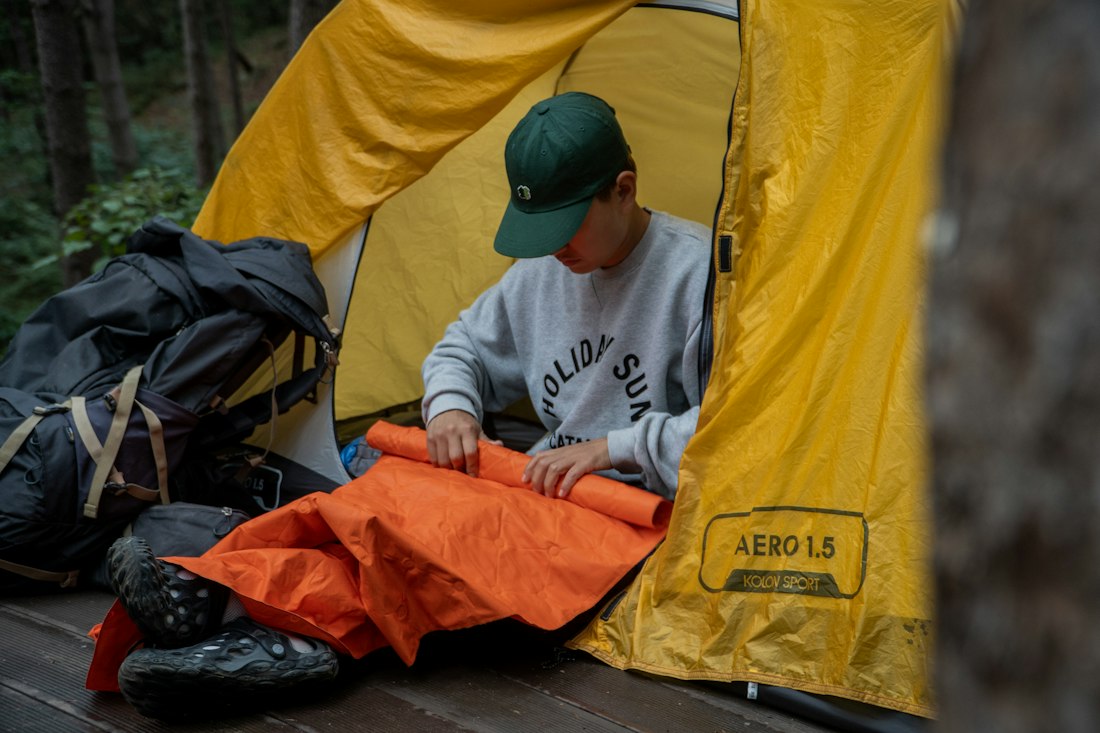
Packing a wet tent to leave a campsite may be unavoidable. Treat that as transport, not storage. Once you have a suitable place, take the fly, inner, groundsheet and accessories out of the bag. Choose a ventilated space and arrange them so damp layers do not stay pressed together. Protect indoor floors and keep the drying area clear of heat sources and sharp objects.
Remove loose dirt gently
Shake or brush away loose debris using a method allowed by the maker. Give extra attention to folds, corners, zips and the bag itself. If the fabric needs more than this, read the tent’s cleaning directions first. Strong cleaners, aggressive scrubbing and machine washing can be unsuitable for tent materials. A routine designed for a jacket is not automatically appropriate for a tent.
Check all the places that stay damp
A fly can feel dry while webbing, pole sleeves or seams remain wet. Open doors and spread out folded sections so air reaches them. Check the underside of the groundsheet and the inside of the carry bag. Drying time depends on conditions; an arbitrary number of hours is less useful than checking each component. Avoid prolonged unnecessary exposure to strong sunlight once drying is complete.
Make a short repair note
Inspect the poles, pegs, guylines and zip operation while everything is unpacked. Record missing parts or damage rather than relying on memory. Consult the manufacturer before applying a repair product, since fabric coatings and adhesives differ. Keep a note with the storage bag so a small problem does not become a surprise at the next campsite.
Store for the next trip
Once completely dry, store the tent in the way its maker recommends, in a suitable dry location. Avoid crushing it under heavy equipment. Keep poles and sharp pegs organised so they do not damage fabric. Before the next outing, check the parts list and practice pitching if anything has changed. This routine is about making equipment ready again, not making used gear look untouched.
A check before you decide
| Component | Before putting it away |
|---|---|
| Fly and inner | Check seams, folds and corners for moisture. |
| Groundsheet and bag | Dry both sides and remove loose debris. |
| Poles, pegs and guylines | Count, inspect and note missing or damaged parts. |
| Repairs | Use instructions and compatible materials for the exact tent. |
Sources and approach
Sources checked 17 November 2026. This is general, researched information. We have not carried out a hands-on test of the products shown. Read the specific manufacturer’s instructions and current local guidance. Our editorial policy.